Solo Travel Photography: The POV Format Sponsorships Are Looking For
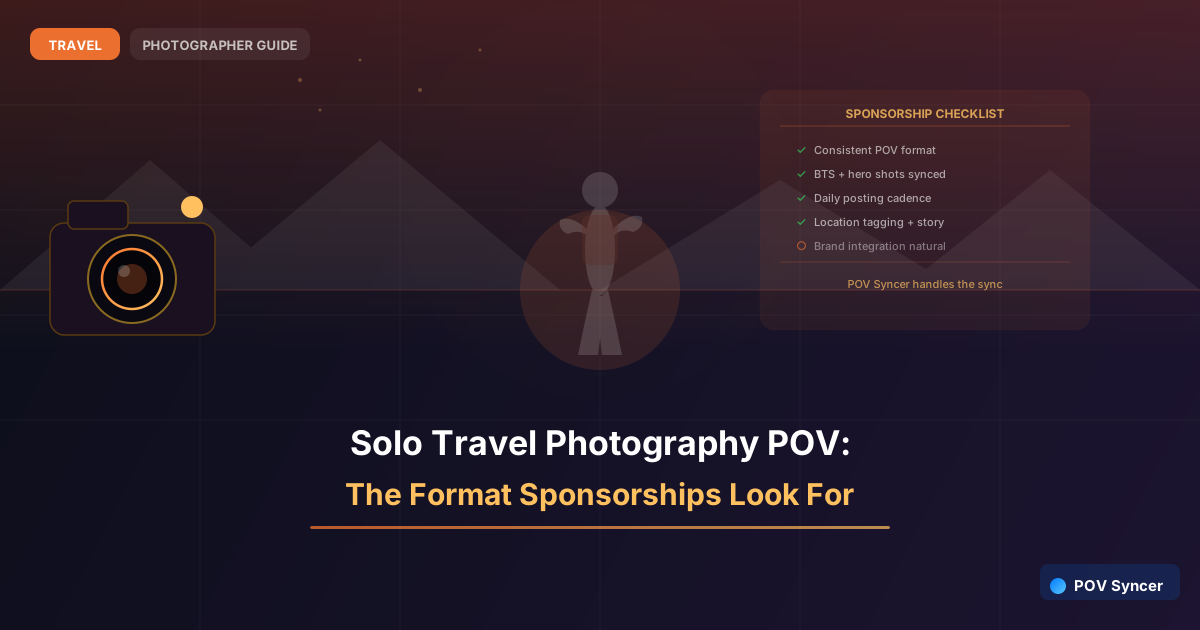
Camera brands and travel companies sponsor photographers for one reason: reach. They want their gear or their destination in front of an audience that aspires to travel and photograph. What most photographers pitching for sponsorship do not understand is that the content format brands want most is not the finished hero shot — it is the behind-the-scenes video that shows their product being used in the field. A POV Reel of a solo photographer at a pre-dawn location, camera in hand, working through a sunrise session, with the best frames appearing at the exact moment they were captured, is the camera brand's ideal sponsored content.
The solo travel photographer who produces this format consistently — one POV BTS Reel from every shooting session on every trip — is producing exactly the content library that sponsorship conversations are built on. POV Syncer makes that consistency achievable by assembling each Reel automatically from Ray-Ban Meta footage and EXIF timestamps, turning what would be hours of manual editing into fifteen minutes of import and export. The photographer who can honestly tell a brand "I produce a BTS Reel from every shooting session on every trip" is in a fundamentally stronger sponsorship position than the photographer who posts polished hero shots without process content.
What Camera Brands Actually Want From Sponsored Content
Camera brand social media teams have a specific content problem: they need authentic in-use footage that does not look like advertising. A photographer holding their camera to camera and explaining its features is advertising. A genuine POV video showing the camera being used in a real location to produce real results is content that the brand's audience will watch, save, and share. The brand wants to be associated with the authenticity of the process, not just the quality of the output.
The POV format serves this need better than any other format a solo photographer can produce without a crew. The Ray-Ban Meta footage shows the scene from the photographer's perspective — the camera body is not visible, but the context of being a photographer working a location is completely clear. When your stills appear in the footage at the captured moment, the audience sees the connection between the effort and the result. That narrative is exactly what camera brands want their gear associated with.
Building the Sponsorship Pitch Around Your POV Content Library
A sponsorship pitch to a camera brand or travel company is strongest when it includes a media kit that demonstrates consistent content production over time. Three months of weekly POV BTS Reels from shooting sessions in multiple locations tells a brand's partnerships team that you can produce the content consistently, not just once for a paid collaboration. Your media kit should include average engagement rates across your POV content, the ratio of saves to likes (a high save rate indicates content with lasting reference value), and the geographic spread of your shooting sessions.
Link to three of your best POV Reels in the pitch email — not your three best finished images. The brand's partnerships team is evaluating your ability to produce BTS process content, and three examples of that content are more persuasive than twelve portfolio images. The pitch email itself should be short: who you are, where you shoot, your audience size and engagement rate, and a specific proposal for what the collaboration would look like. Brand partnerships teams receive hundreds of pitches. Clarity and specificity cut through the volume.
Get the free POV Photography Cheat Sheet
Solo travel photography POV settings, sponsorship pitch guide, and daily Reel workflow — one printable page for travel photographers.
Free PDF, no spam. Unsubscribe anytime.
Solo Travel POV: Making Yourself the Invisible Subject
Solo travel photography has a specific advantage for POV content: the absence of a crew makes the footage more intimate and more relatable. A viewer watching a solo photographer navigate a foreign city at dawn — making decisions alone, dealing with unexpected light, finding compositions without a second opinion — identifies with that experience in a way they cannot identify with a well-resourced expedition shoot. The vulnerability and resourcefulness of solo travel photography is the content, and the POV format captures it honestly.
The most effective solo travel POV content includes the moments that do not work alongside the moments that do. The missed shot — arriving at a location too late for the light, or finding it crowded when you expected it empty — is as interesting to watch as the successful capture, because it is honest about the difficulty of the work. Authenticity in travel photography content is increasingly the differentiator between photographers that audiences follow deeply and photographers that audiences scroll past.
Gear Weight and Long-Term Sustainability
Solo travel photography is constrained by what you can carry alone across multiple destinations over weeks or months. The Ray-Ban Meta Gen 2 glasses weigh 49 grams and fit in a shirt pocket — they add nothing meaningful to the weight of a travel photography kit. A Fujifilm X100VI, a Ricoh GR IIIx as a backup, and the Ray-Ban Meta glasses represents a complete travel photography and content production kit that fits in a small daypack. That portability is what makes the POV content strategy sustainable across extended travel rather than just a single trip.
The critical timezone detail for travel POV sync: update your camera clock to local time the moment you land. POV Syncer matches EXIF timestamps from your stills to frames in the POV footage — if your stills camera is still on home time and your glasses are recording local time, every image will be placed at the wrong point in the video. Two minutes at the airport to update the camera clock prevents hours of manual correction later.
From Trip Content to Ongoing Sponsorship
The strongest sponsorship relationships are built on demonstrated reliability over multiple trips, not a single impressive pitch. A photographer who delivers consistently good POV BTS content from three or four trips across a year gives a brand's partnerships team the confidence to move from a gifting relationship (free gear in exchange for coverage) to a paid partnership. That progression — from gear gifting to fee-based commission — follows naturally when the photographer produces what they promised, consistently, in a format the brand can actually use.
Once a paid partnership is established, the POV BTS format becomes even more valuable because it satisfies multiple deliverables simultaneously. A single shooting session produces the hero images the brand needs for their feed, the BTS Reel the brand can reshare, and the process footage that makes your own content compelling. The fifteen-minute assembly time with POV Syncer means the BTS deliverable costs you almost nothing in additional production time beyond the session itself.
Produce the Content Sponsorships Are Looking For — Automatically
POV Syncer syncs your travel shots to POV footage via EXIF timestamps. Fifteen minutes per Reel, every session, every trip.
Download POV Syncer FreeAvailable on iOS. Free to download — full timeline editor included.
Related Guides for Travel Photographers
- Travel Photographers: Turn a 2-Week Trip Into 14 Daily Reels
- Adventure Travel POV: Action Cam Footage That Builds Your Portfolio
- Travel Photographers: Field to Feed Workflow with POV
Want Settings Cheat Sheets for 20+ Camera Combos?
Join 1,000+ photographers getting weekly POV workflow tips, camera-specific guides, and EXIF sync settings delivered to your inbox.
Free, no spam. Unsubscribe anytime.